At one US automotive OEM, our hardest critic was their best engineer. A lead crash expert — explicit dynamic simulation, LS-Dyna, a career built on mastery of that tool. When we started building agents to run his simulations, he was, let us say, politely unconvinced. And he had ammunition: he kept surfacing edge cases the agents could not handle. His verdict was blunt. This will never work.
He was right about the edge cases. He was wrong about the conclusion but only because of what we did next. We did not route around him. We brought him into the build. He built the agent himself, and we kept him in the loop for exactly the cases where his judgment was still required. Every time he resolved one, that case was folded back into the agent. Piece by piece, the system earned his trust on his own standards.
Somewhere in that process, his position flipped. He had not lost his expertise. He had multiplied it. Instead of personally running a fixed number of crash simulations a week, he now owned a system that carried his judgment at scale. More impact, not less. That is the whole story of getting agentic AI past the pilot, compressed into one engineer: trust is not granted, it is earned.
I believe that Gartner® makes the same point in its September 2026 research, AI Agent Promise vs. Reality: autonomy must be earned with reliability. After roughly thirty of these deployments over the last eighteen months, I would put it more plainly. The technology was almost never what decided whether a project reached production. Trust was.
Where we are actually going
Let me zoom out, because the destination matters. What everyone in this industry is really building toward is a kind of JARVIS for engineering: a universal, always-available co-worker with every tool connected, every expert's knowledge digitized, that you can hand real work to and rely on the result. A system that does not just answer questions about engineering but does engineering.
And the capability to get there is arriving fast. The frontier labs are moving directly into this domain, and they say so in public. OpenAI's GPT-6 Astra launch put engineering right into the release: a CAD benchmark where the model rebuilds 3D parts as CAD code, a circuit board laid out and routed in KiCad, a gearbox demo. Anthropic reports its own models on the same CAD benchmark. CAD and spatial work are now on the labs' own scorecards. Standards like MCP are unifying how agents reach tools. There is enormous money and talent pushing on it, and engineering is a large market opportunity the labs clearly intend to win. The models will keep getting more capable, and the pace is accelerating.
So here is the thing I want every engineering leader to internalize: the question was never whether the technology will be ready. It will be. The real question is when it gets applied at scale... and the only gate on scale is trust.
Why the demo is the easy part
The expectations are sky-high, and honestly overhyped: paste in a requirement, click a button, out comes a finished part. A demo like that is not hard to produce. The reality of a production system is insanely more complex, and the gap between the two is almost entirely about whether the output can be trusted.
A pilot can generate beautiful, colorful pictures of a part. Whether that part is real is a different question entirely. You have to look at the mesh quality, the boundary conditions, the stress results, the tolerances, every detail an experienced engineer would check before signing their name. In a real enterprise there is also governance, access rights, dozens of tools, and decades of expertise that all have to be connected. None of that is one-click. And skipping it is not just disappointing, it is dangerous: an engineering decision made on a plausible-looking but wrong result is worse than no decision.
Where reliability actually comes from
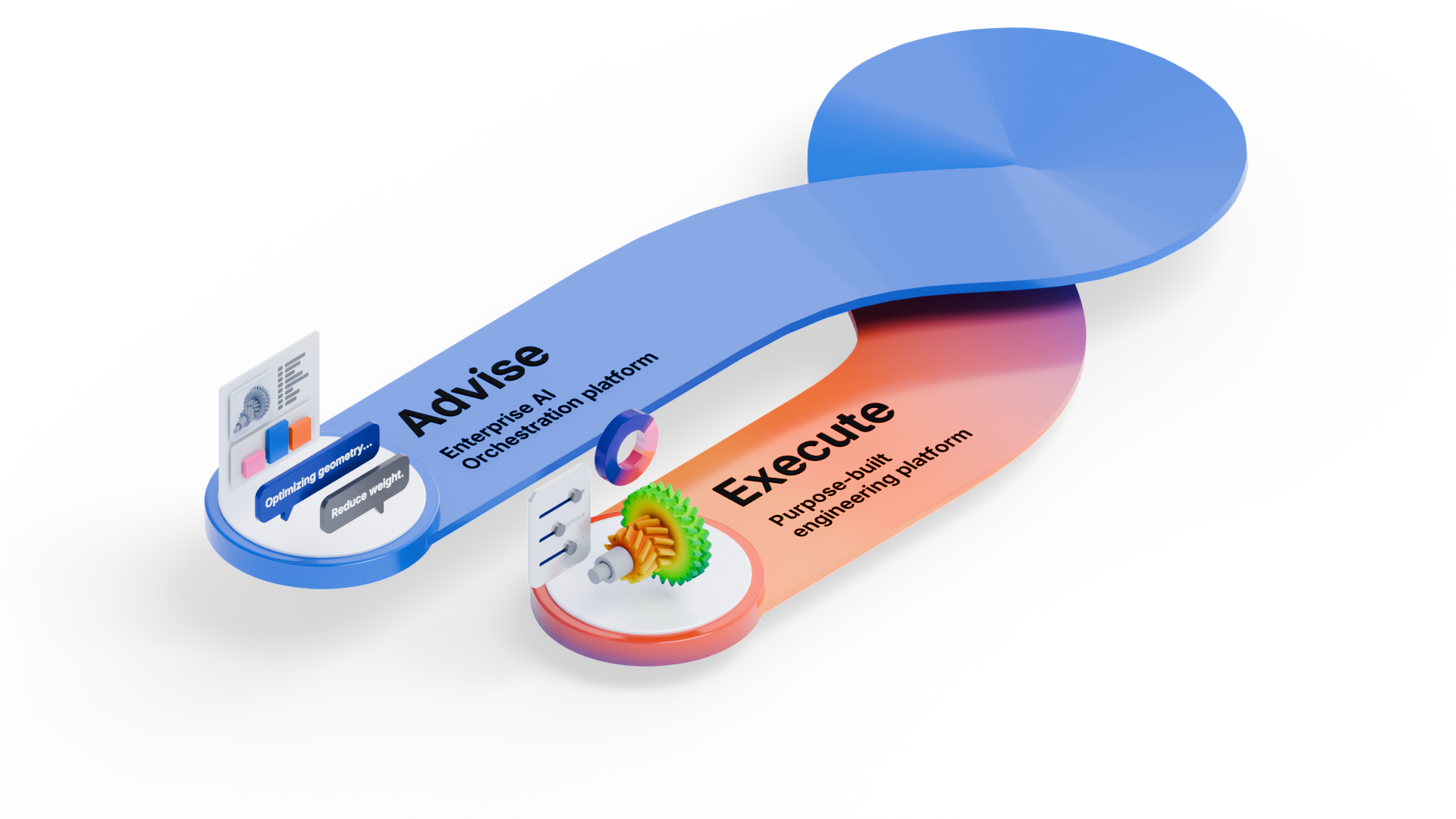
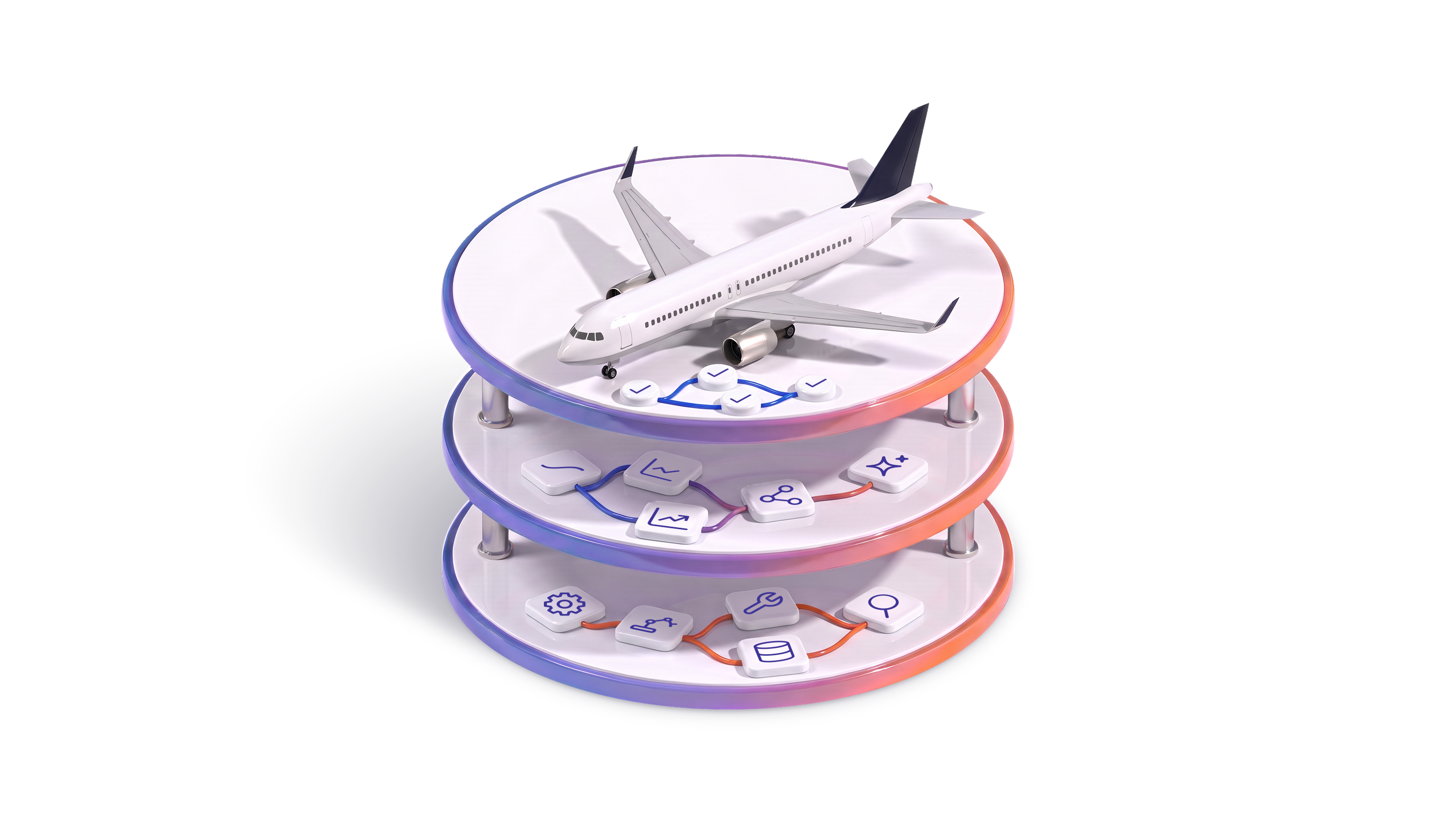
The way through is an architecture that mirrors how your engineers already work. Split the system in two.
The tooling layer is deterministic, and it must be. Cleaning up a CAD model, generating a mesh, running an explicit dynamic simulation, reading out stress; that is physics in software. It has to be correct every single time, exactly as it was before any agent existed. Nothing probabilistic belongs there.
The agentic layer is the judgment on top: orchestration, deciding the next step, interpreting results, handing work between steps. The parallel to your people is exact. A human engineer builds the geometry in CAD, runs the solver, reads the stress, and decides what to change. The tool was always deterministic; the judgment was always hers. Agentic AI automates the judgment and the driving of the tools. It does not, and must not, do the physics. When a VP of Engineering asks whether they can trust an agent with a crash simulation, that is the answer: the agent is not doing the physics. Your validated solver still is.
Trust is engineered, and it is faster than you think
A correct simulation is necessary but not sufficient. The whole system has to earn trust the way that crash expert made it earn his: evals, running the agentic process in parallel with the manual one, checking case after case until it has proven enough correctness to retire the old path. Plus audit trails and human review where judgment belongs. That is real engineering work, not a switch you flip.
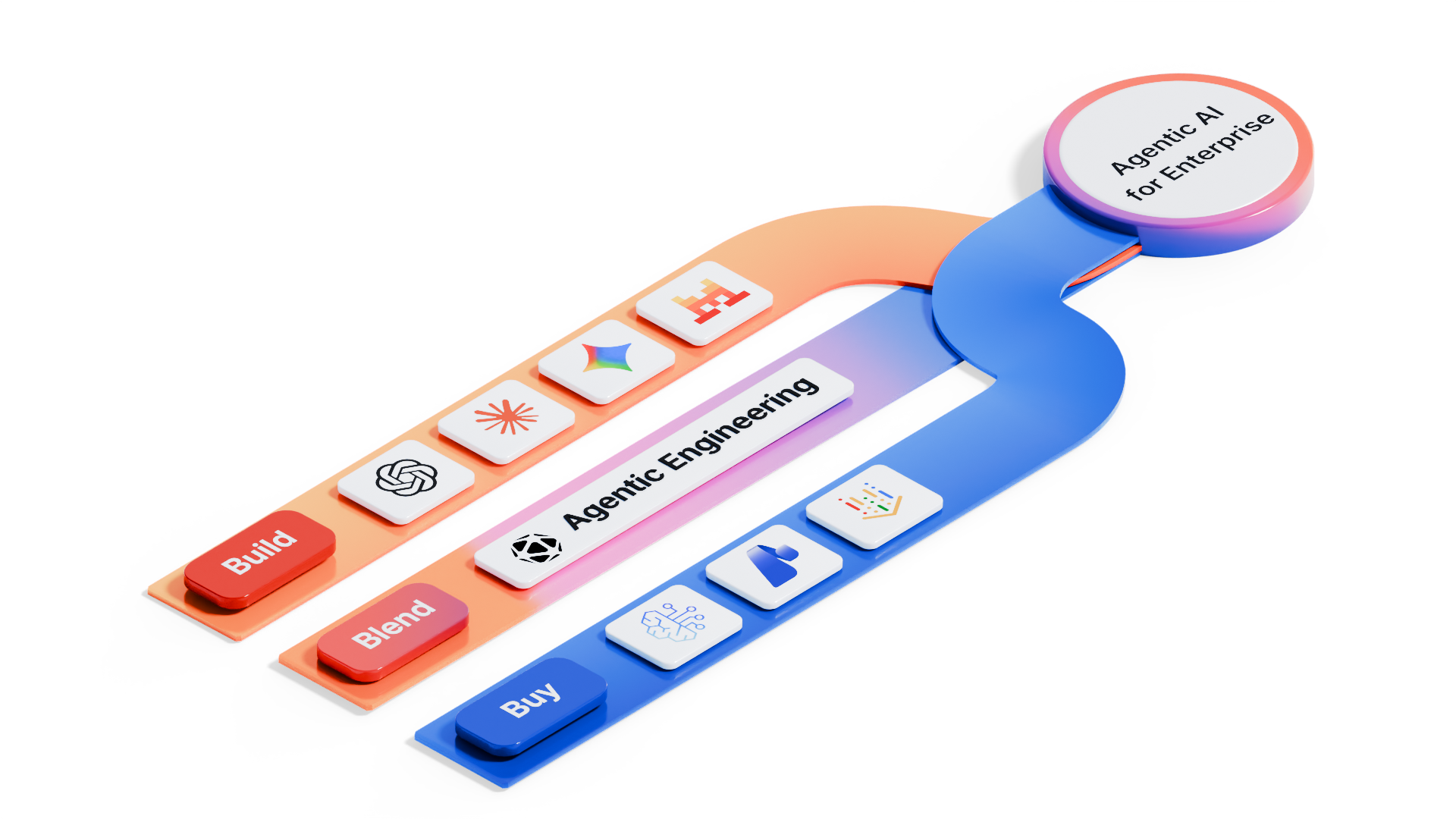
The encouraging part: with the right use case and the right partner, it is fast. Weeks to months. You can buy and build the system quickly. What you cannot buy, and cannot compress, is how fast your organization changes how it works.
The real bottleneck is your people which is why you start now
Your best engineers are experts at operating a tool. With agentic AI, their role shifts from operating the tool to building and supervising the agents that operate it — from running simulations to encoding their judgment into a system that runs them. For someone whose career is built on being the person who knows the tool, that can feel like the ground moving. The crash expert felt it. Most of your best people will.
That change runs on human time, and it is the critical path not the technology. The models improve faster than any organization can absorb them. So waiting for a better model optimizes the one thing that was never your constraint. Start now, with one real use case, and bring your experts in as builders, not bystanders. That is how you earn trust before you need it at scale.
What this looks like in production
A few examples from our deployments, at different stages:
- IMS Gear: a request for quotation that took several weeks is now a finished quote in about ten minutes, with more than a hundred quotes processed in production. A data agent classifies incoming PDF and CAD files into the PDM system; rule-based workflows apply IMS Gear's own costing tables; a supervisor routes each request to a domain agent for plastics, metal or industrial, which clarifies details with the engineer and compiles the quote. The LLM interprets; the rules decide. The engineers built it themselves over four validated iterations before going live. The volume that needed two engineers now moves with one.
- SEAT: body-development workflows in production cut processes from hours to minutes, and a new manufacturing-feasibility system aims to return a first assessment in about thirty minutes instead of four weeks. Deterministic workflows run geometry extraction and forming simulations; agents analyze the results and flag problems; the engineer decides what to do next.
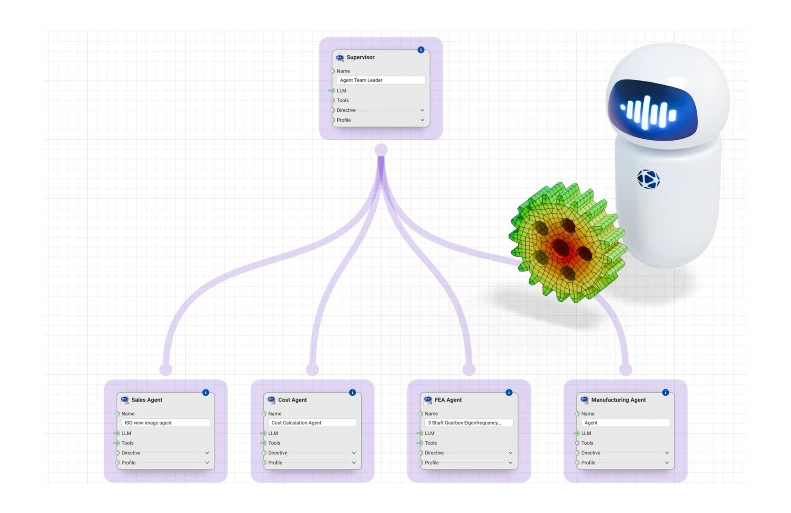
- NASA: Ryan McClelland of NASA Goddard described this publicly in his 2026 CDFAM keynote. His team uses Synera to build agentic systems for precision engineering: a “Text to Bipod Flexures” setup where a supervisor coordinates a CAD design agent and a simulation agent for stress, modal and thermal analysis, with a logging agent he credits for reliability. Work that took months ends in a verification report in a fraction of the time. His playbook is this article's argument told by a NASA engineer: standardize inputs and outputs, document the process, automate, verify with evals, then scale. He is candid that details like adhesives and alignment still need a human which is exactly the point. The agent handles judgment and orchestration; the validated engines do the physics.

Start with the slow thing
If you take one decision from this, make it this: treat the organizational change as the project and the technology as the enabler, not the other way around. The reliability can be engineered, faster than most people expect. The trust has to be earned, case by case, by the very experts who will resist it hardest, and that is the part a better model will never do for you. The future everyone is racing toward is real, and it is coming. It will belong to the organizations that started earning trust today.
To go deeper on why demos stall before production and what closes the gap, download the Gartner research on AI agent adoption, challenges and enterprise readiness.
Gartner is a trademark of Gartner, Inc. and/or its affiliates.
Gartner, AI Agent Promise vs. Reality: Adoption, Challenges and Enterprise Readiness, By Leinar Ramos, Ben Yan, Anthony Mullen, Arun Chandrasekaran, Tom Coshow, Tong Zhang, Pieterden Hamer, Haritha Khandabattu, Erick Brethenoux, Gabriele Rigon, 28 September 2026.
About the Author:

Dr. Moritz Maier
CEO & Co-founder
Dr. Moritz Maier is CEO & Co-founder of Synera. He was fascinated by the connection between technology and entrepreneurship from an early age – founding his first company at 16. His path later led him through scientific research and consulting to the central question that drives him to this day: How can engineers work more intelligently through automation – rather than just faster?
With a PhD in product development processes and experience in generative design, additive manufacturing, and process automation, he now works on the vision of digital engineers: AI agents that support technical development teams and give them more space for innovation.
His approach: Technology should adapt, not the other way around – only then can it truly help people in everyday engineering.