The new Gartner® report on why AI agents still fall short in live operations
Why agent hype and production reality diverge, and what engineering leaders can do to avoid stalling pilots
Why it matters now for engineering leaders
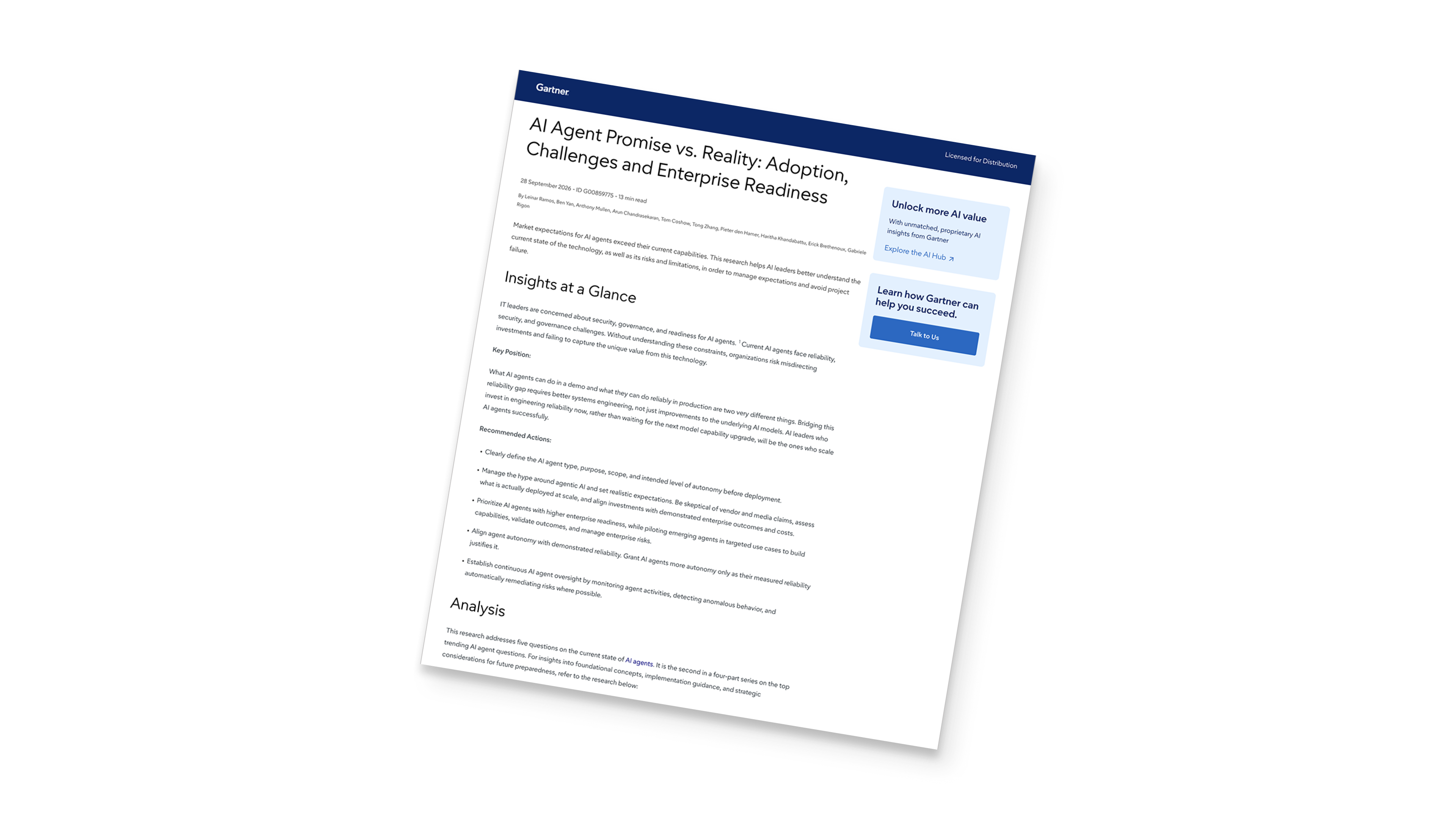
Almost every engineering leaderis evaluating agentic AI technology right now, under pressure to show results fast. At the same time, “Gartner projects that over 70% of AI agent projects will fail by 2029.” The new Gartner® report, AI Agent Promise vs. Reality: Adoption, Challenges, and Enterprise Readiness, maps where the technology actually stands: what agents can do reliably in live operations today, where they fall short, and how to tell if a pilot might stall before you commit budget.
What’s inside the report
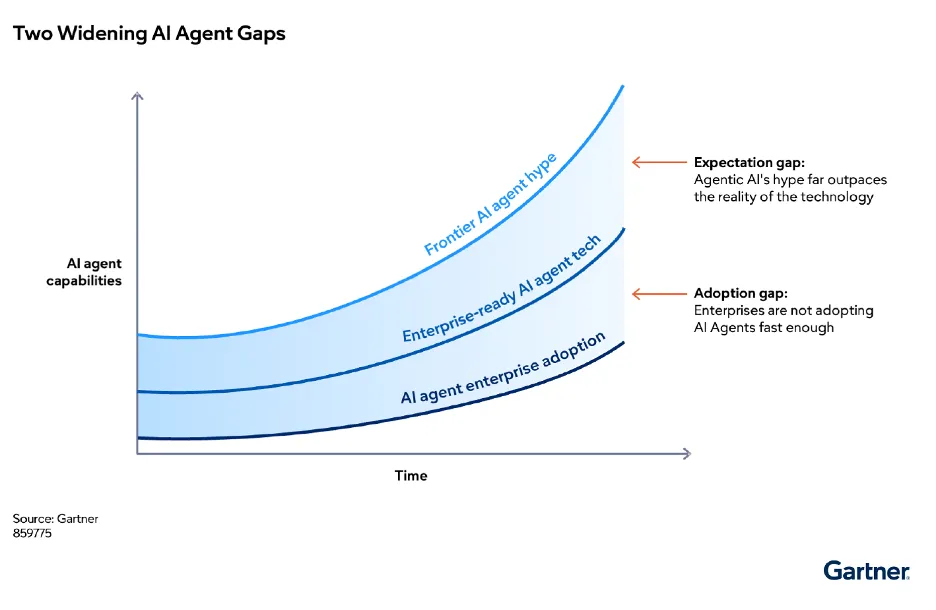
An honest and independent analysis on the current state of the technology, part of a four-part on the top trending AI agent questions. The report summarizes the situation in one line: "Agentic AI is both overhyped and underutilized."
Then it sets out to answer five questions:
- What are the current challenges and limitations of AI agents?
- What is the current adoption of AI agents in enterprises?
- What is Enterprise Readiness of Different Agents?
- How do I manage the reliability challenges of AI agents?
- What are the risks of AIagents?
Who should read it?
This report is written for AI and engineering leaders deciding where agentic AI fits in R&D and product development, and how much autonomy to grant an agent before its reliability is proven. If you are setting agentic AI strategy for an engineering organization, it gives you the challenges and insights by Gartner, from reliability and cost to planning, safety, and explainability, plus the enterprise-readiness view across agent types.
Complete the form to read the full Gartner® report ->
Prefer to talk through your AI for engineering solution?
Book a 30-minute consultation
Gartner is a trademark of Gartner, Inc. and/or its affiliates.
Gartner, AI Agent Promise vs. Reality: Adoption, Challenges and Enterprise Readiness, By Leinar Ramos, Ben Yan, Anthony Mullen, Arun Chandrasekaran, Tom Coshow, Tong Zhang, Pieterden Hamer, Haritha Khandabattu, Erick Brethenoux, Gabriele Rigon, 28 September 2026.
Download the report
Synera’s approach to agentic AI for engineering
Synera’s read: for engineering teams, closing the adoption gap depends less on waiting for the next model and more on redesigning processes around the agents to ensure reliability and explainability.
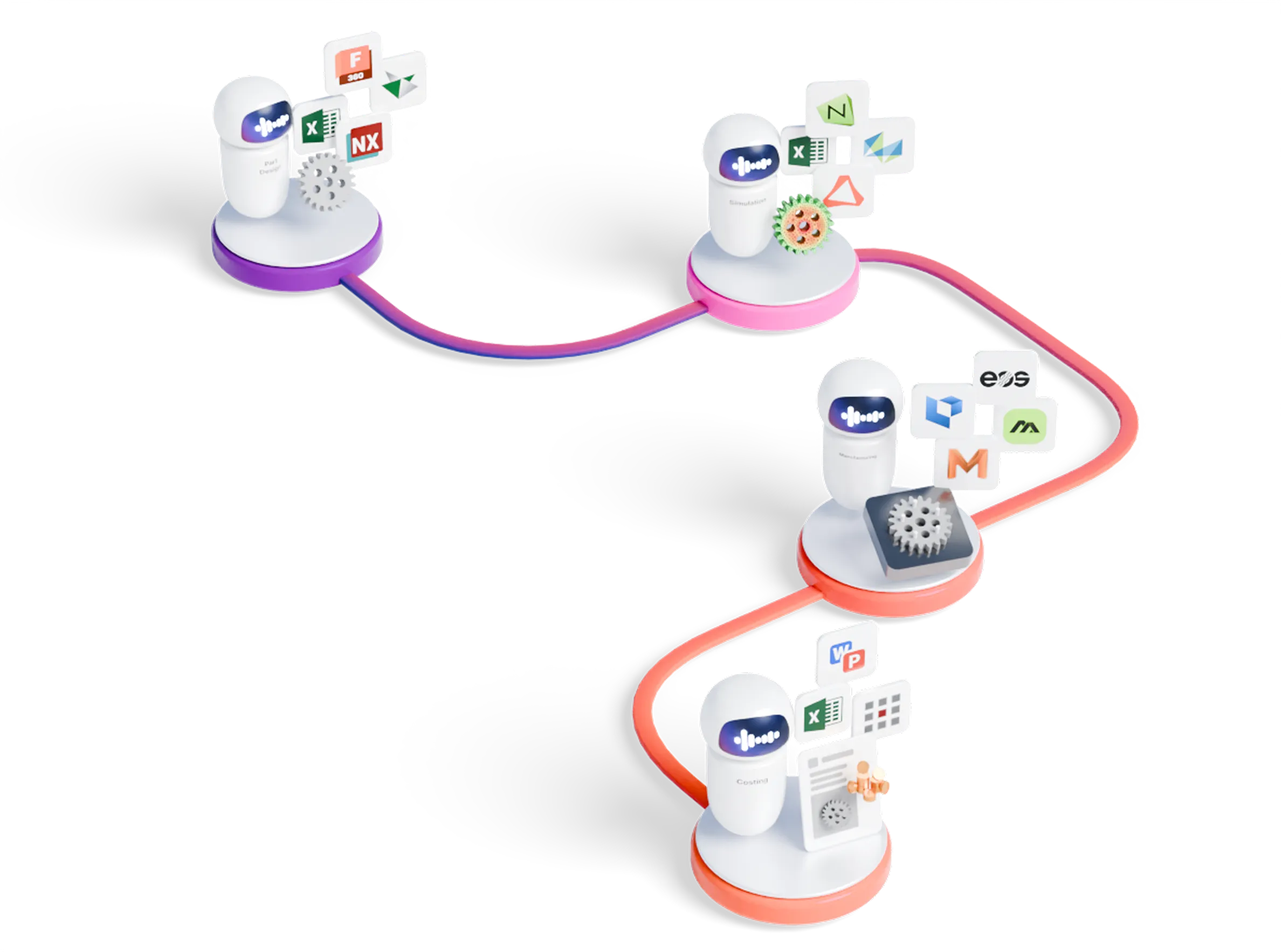
Trusted by R&D teams at 6 of the top 10 automotive OEMs. Synera is the number one choice for global manufacturers. It connects the CAD, CAE, PLM, ERP and costing tools R&D teams already trust, then runs teams of agents that execute real engineering work across design, simulation, and costing, following repeatable workflows.
Deployed on-premises, Synera keeps sensitive engineering IP inside your environment. The result is a path out of stalled AI pilots and into production, so throughput capacity can scale fast, without adding headcount.
NASA, Airbus, Safran, and Arianespace are among the aerospace and defense organizations that run engineering on Synera. At Airbus, request-for-tender turnaround moved from 50 hours to 7 minutes. At NASA, design exploration that once took two engineers two days to produce four variants now lets a single engineer explore more than 100 variants in an hour. BMW transformed a 3-week design cycle, into 2 minutes. IMS Gear cut quote time by 99% with Synera. At SEAT, a Volkswagen Group subsidiary, engineers answer the manufacturability question in 30 minutes at the design phase.