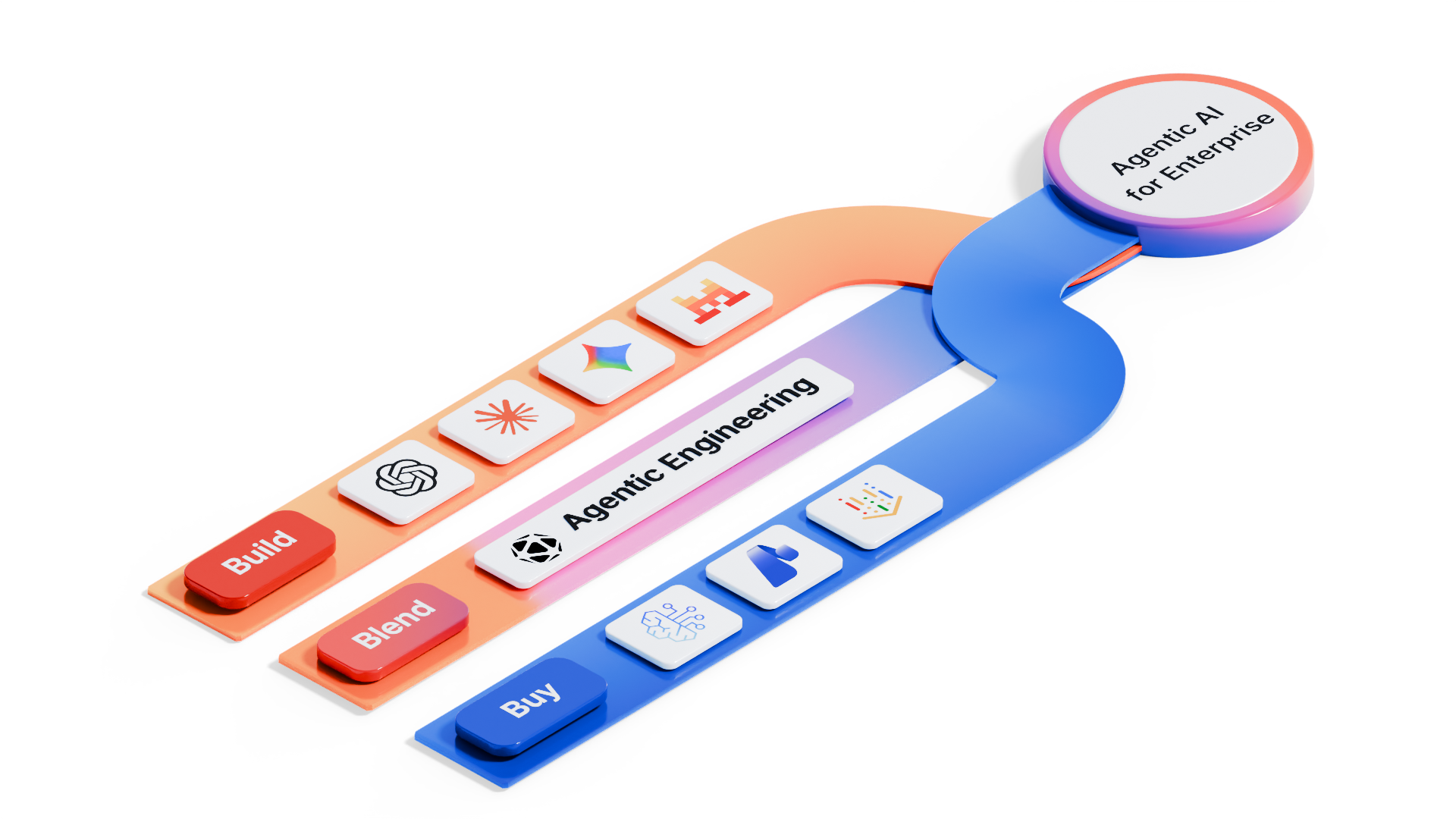
Agentic AI for engineering is the most powerful engineering technology that has been introduced in my career. And right now, across aerospace and defense, I keep watching teams bolt a shiny new engine onto an airframe that was never built to carry it. It looks impressive on the ground. Then you ask it to fly.
The leaders I meet with are not short on ambition. The budget is there; the conviction is there. There is no question that agentic AI is the future. What is missing is underneath the ambition. And until that gets fixed, the AI engine just makes noise.
What I see when a pilot stalls
There is a pattern. Engineering teams have been told to introduce AI into their process. A team picks a use case, connects a large language model (LLM), runs a demo that lands beautifully in the room. Then it meets a real, regulated, multi-tool engineering process, and it falls apart.
Here is what that looks like in practice, from the conversations I have every week:
- Agents producing plausible-sounding outputs that are wrong, and an engineer who has to catch it.
- Compute and budget burned on workflows that never needed AI in the first place.
- Results no one can trace, in an industry where a result you cannot trace is a result you cannot certify – or scale.
- Engineers losing trust after one bad experience and quietly working around the agents instead of with them.
- Costs tracked, yet benefits described in adjectives, not numbers.
None of that is an AI problem. Every one of those is a foundation problem.
The drag is the foundation, not the model
I am not the only one saying it. A recent Gartner® report, Top Aerospace and Defense Manufacturing Trends for 2026, puts it as directly as I have seen an analyst put anything: “The real drag on innovation is not technology but enterprise-wide failure in A&D to commit to foundational elements as strategic accelerators.”
Read that twice. The drag is not the LLMs. It is the processes, the fragmented tools, and the digitalization that never happened. As the same report says, “AI hype cannot compensate for poorly governed models, inconsistent information, or unclear system states, especially in a highly engineered industry.”
You cannot automate your way out of a foundation you never built. That is the whole game.
And there is a version of this that fails in the opposite direction. Some of the largest companies in the world have told their people AI is no longer optional. So teams launch agents across every process they can find, not because it is strategic, but because it looks like progress.
What a foundation that can carry AI looks like
Before you judge any AI approach, get honest about the ground it has to stand on. In aerospace and defense, three things matter most.
- Governed, model-based definitions that act as a single source of truth across design, manufacturing, and the supply chain.
- A connected toolchain, so data moves between engineering systems without a person carrying it by hand.
- Execution that is deterministic and auditable, because this industry has to certify what it ships.
Deterministic vs. Heuristic is the key! Deterministic technology is the only tech that Engineers will accept. All of it is the line between an initiative that reaches production and one that becomes a set of AI hopes.
Where enterprise AI stops and engineering starts
Now let me be direct, and this part is my opinion, not the analyst’s. The broadly horizontal enterprise AI platforms, from Microsoft or Palantir, are built to read text and databases and recommend a decision. That is genuinely useful for running a business. It is not the same as doing engineering. None of them can natively turn CAD into a mesh, run a finite element analysis, read the stress results, and change the geometry against physics constraints.
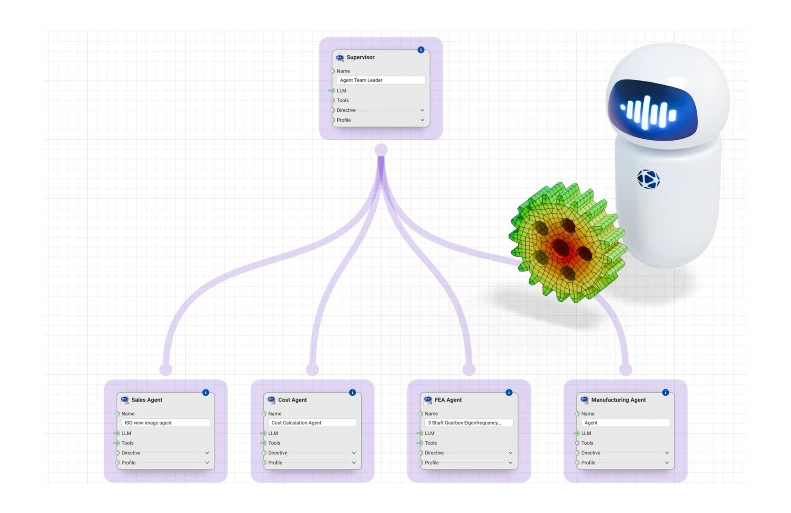
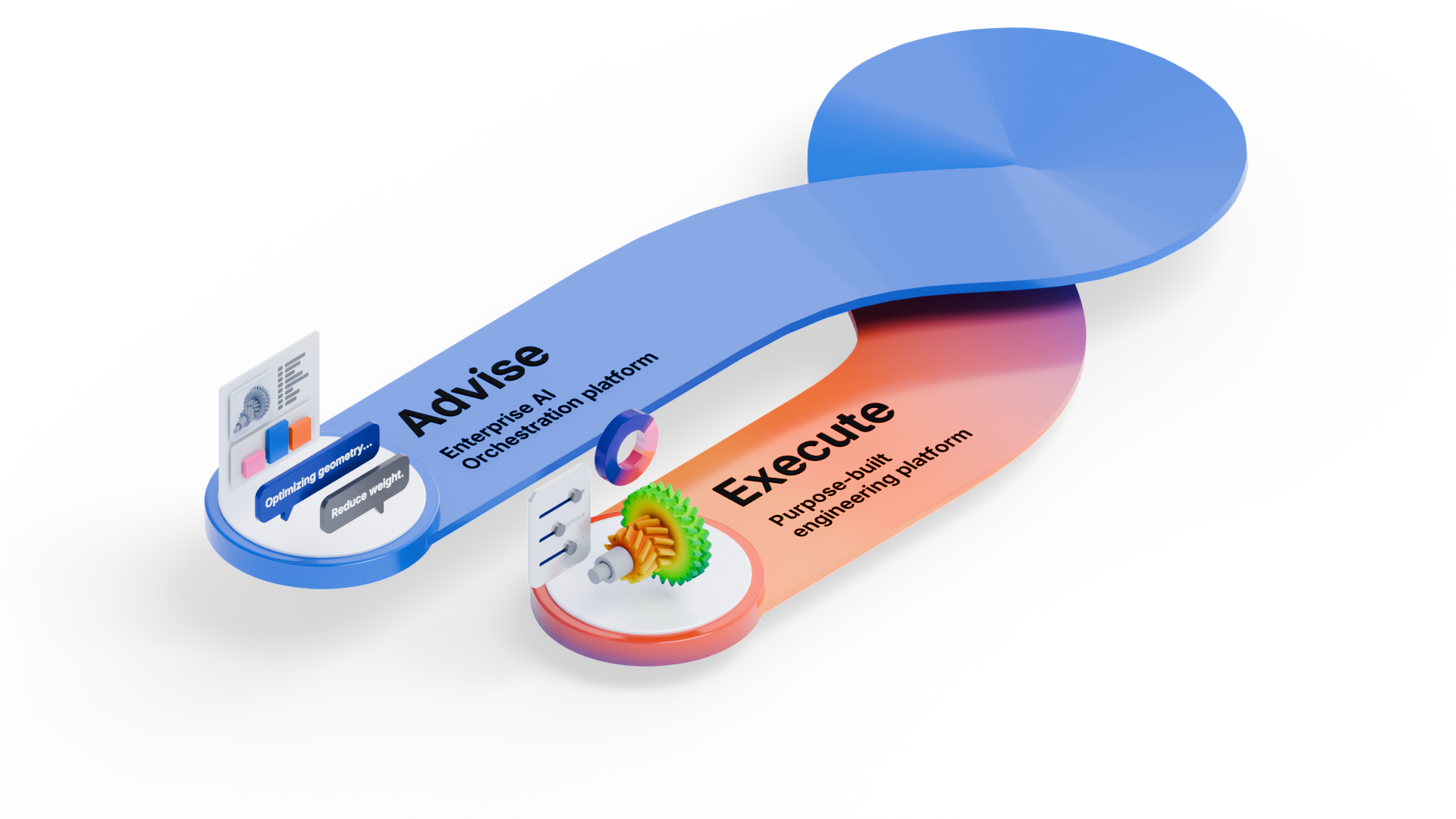
So here is how I say it to customers. Enterprise platforms advise. Synera executes the engineering. We built Synera as the platform for agentic AI for engineering: it connects the specialized tools aerospace and defense teams already trust, then runs teams of agents that change geometry, run simulations, interpret results, and carry a process end to end, with every step logged and auditable, and the engineer directing the work. It runs on-premises, so intellectual property (IP) never leaves your environment.
That is why the foundation argument is not abstract for me. The agents only pay off when they sit on connected tools, digitalized processes, and governed data. We work with aerospace and defense names you know, NASA, Airbus, Safran, Arianespace. At Airbus, once the foundation was in place, a request-for-tender process that took 50 hours started running in 7 minutes. At NASA, a single engineer now explores more than 100 design variants in an hour, work that used to take two engineers two days to produce four. The engineers did not disappear. They got back the time the old handoffs were stealing.
The clock is already running
This is not an open-ended window. Gartner expects adoption of model-based definitions across design, manufacturing, and supplier collaboration, augmented by AI, to climb “from an existing 40%” to “more than 80% of A&D companies” by 2030. The teams building the foundation now will have something solid to scale on. The teams still demoing on disconnected tools will keep wondering why the demo never became a program.
So one question, and it is the one I would ask in your next leadership meeting: if an agent ran one of your core engineering processes tomorrow, is the foundation underneath it ready to carry the load, or just ready to impress in a demo?
The honest answer to that is worth more than any pilot. The Gartner report is a good place to pressure-test it.
Read the Gartner report on aerospace and defense manufacturing trends for 2026
Want the next piece of research the day we share it? Subscribe to the Synera newsletter.
About the Author:

Ubaldo Rodriguez
Chief Revenue Officer
Ubaldo Rodriguez brings over 25 years of engineering software market expertise to Synera, where he leads revenue strategy and go-to-market execution as Chief Revenue Officer. He specializes in bringing transformative technologies into mainstream adoption across aerospace, automotive, and manufacturing, with previous senior leadership roles at PTC, Agile Software, Ansys, and Altair. At Synera, Ubaldo works with global engineering leaders at organizations to integrate agentic AI into their engineering workflows — helping teams move faster, reduce inefficiency, and accelerate time-to-market.