For much of the past two years, the conversation around artificial intelligence has ricocheted between chips, infrastructure and foundation models. Investors have poured capital into semiconductor companies, governments have raced to secure computing capacity and public markets have searched for Europe's answer to Silicon Valley's AI giants. These are all critical parts of the conversation, but on their own they are reductive: they overlook where the next phase of value creation will happen.
Europe's greatest AI opportunity lies in the industrial strengths it has spent decades building. From Airbus and BMW to Siemens and Bosch, its competitive advantage has been the ability to translate engineering expertise into the physical systems, infrastructure and products that underpin the global economy. The challenge now is to amplify that advantage by embedding AI into the engineering workflows that create those products: unlocking productivity, preserving expertise and accelerating innovation at scale. Today, that advantage is under pressure.
Global competition is intensifying. Product development cycles are shrinking. Experienced engineers are retiring faster than they can be replaced. Across Europe, manufacturers face a growing talent gap and cost pressures that threaten both productivity and long-term competitiveness. AI has the potential to change that, but only if it moves beyond experimentation and into the workflows where engineering work actually happens.
And so, a new category emerges: agentic AI for engineering.
Digital coworkers that act, not copilots that advise
For much of the AI era, the focus has been on systems that help people work. They surface information, generate content and provide recommendations. Valuable as those capabilities are, they leave the burden of execution with the human.
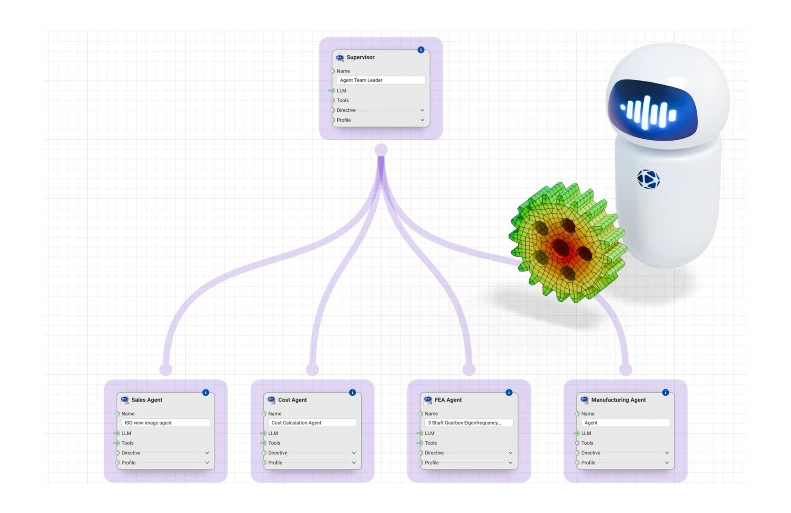
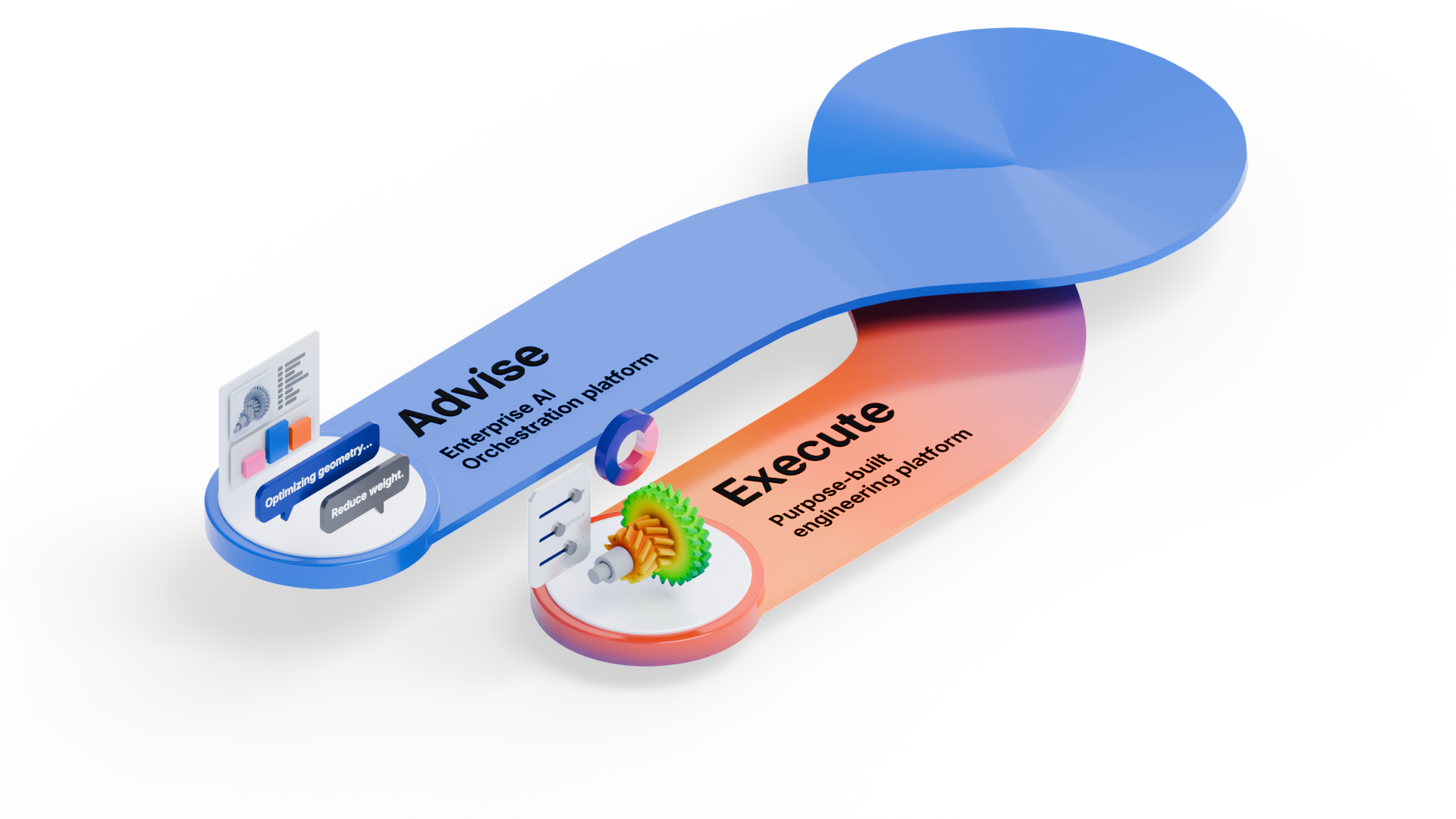
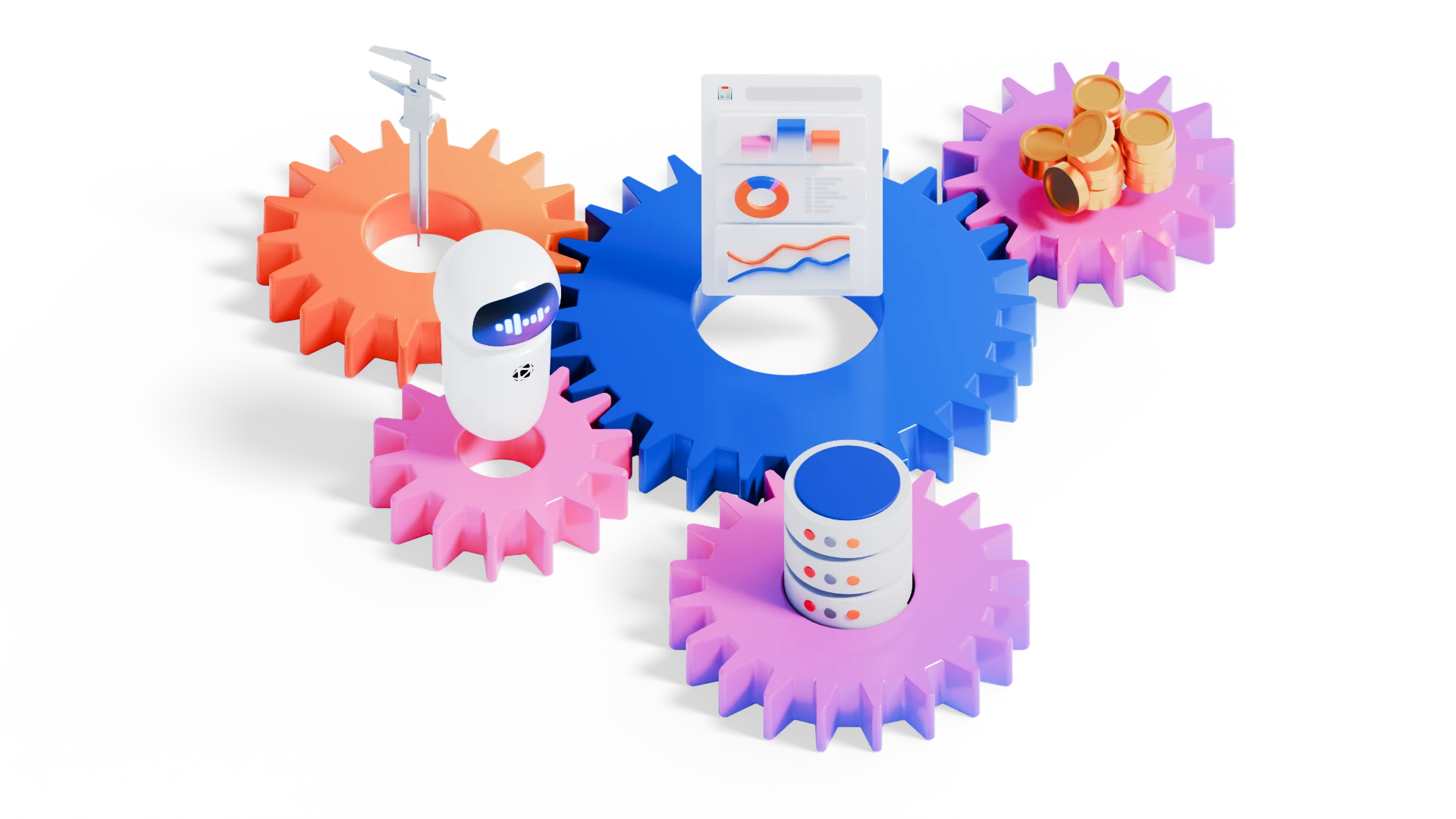
The next generation of AI is different. In engineering, it is giving rise to what we call digital coworkers, JARVIS for engineers: specialized agents that execute work, not just analyze it. Rather than suggesting the next step, they can streamline workflows handling defeaturing, surface detection, and meshing, run simulations, automate design exploration, complete entire request-for-quotation (RFQ) workflows, perform cost analyses and coordinate complex workflows across the engineering software stack.
This shift changes the role of the engineer. Instead of spending hours moving data between disconnected systems or repeating routine tasks, engineers become supervisors of increasingly capable teams of AI agents that act like coworkers. Engineering expertise is no longer trapped in individual minds or thousands of guideline documents but embedded into digitalized processes that are repeatable, scalable and can operate continuously across the product development lifecycle.
Crucially, these agentic systems must operate in the environments where engineering work happens. For manufacturers, intellectual property (IP) is often their most valuable asset, making trust, transparency and control non-negotiable. Especially in highly regulated industries, like automotive, aerospace, and consumer goods. That is why this new category cannot simply be bolted onto existing AI copilots. It must be deployed securely, often on-premises, with every action by the agents auditable and every decision traceable.
The results are already visible. BMW reduced a design process from three weeks to two minutes. Airbus compressed a request for tender workflow from 50 hours to seven minutes. IMS Gear cut time-to-quote 99%, from multiple weeks to ten minutes. Across industries, companies are turning months of engineering coordination into hours of execution while preserving the expertise that would otherwise walk out the door with retiring engineers.
This is why the implications extend far beyond productivity. Engineering knowledge has historically been difficult to capture and even harder to scale. As talent shortages intensify across Europe, the organizations that succeed will be those that can transform decades of accumulated expertise into systems that can be deployed, reused and continuously improved. Agentic AI for engineering offers a path to do exactly that.
Why agentic AI for engineering? Why now?
For investors focused on Europe's industrial future, the opportunity is not simply AI adoption; it is whether AI can strengthen the engineering capabilities that have long underpinned Europe's competitive advantage. At the policy level, the EU’s emerging AI and industrial strategies are explicitly framed around technological sovereignty, competitiveness and the public interest, using regulation and targeted investment to keep advanced industrial capabilities and high‑value jobs inside the Union.
For decades, European manufacturers competed on quality, performance and engineering innovation. Today, they face pressure on all three fronts. Global competitors are closing the quality gap while moving faster and operating at lower cost, forcing industrial leaders to find new ways to preserve expertise, accelerate development cycles and improve productivity. At the same time, investments in aerospace and defense are skyrocketing, creating a backlog of orders that will take decades to complete following current engineering and production processes.
From DTCF's perspective, a clear pattern has emerged. The companies generating real value from AI are the organizations embedding AI as digital coworkers into the workflows where products are designed, engineered and brought to market. What makes this moment different is the convergence of two forces: unprecedented pressure on Europe's industrial base to do more with less, and growing demand from leadership teams for AI initiatives that deliver measurable operational outcomes rather than experimental pilots.
The strongest signal is adoption itself. Engineers are notoriously difficult to win over with new software, yet companies including BMW, Volvo, MAN Truck & Bus, Brose, Stihl, Miele and Airbus are already integrating AI into critical engineering workflows. Six of the ten largest automakers by revenue already rely on Synera, and more than 170,000 engineering workflows are live in production. That demonstrates agentic AI for engineering is already beyond experimentation and becoming part of the engineering toolchain.
That is where the next wave of industrial leaders will be created: not at the infrastructure layer, but in the application layer, where AI is embedded as actors into the processes that drive innovation, productivity, and industrial competitiveness.
The opportunity for manufacturers
Over the next 12 months, the way AI agents are embedded into the day-to-day reality of engineering work will become the dominant measure of success. We’ll see digital coworkers becoming as commonplace as CAD software or simulation tools; teams preserving decades of institutional knowledge rather than losing it to retirement and talent shortages. Success will look like product development cycles measured in days instead of years, and manufacturers scaling innovation without scaling costs or headcount at the same rate. Within a decade, an engineer working without a team of agents will look like a factory running without electricity.
For Synera and DTCF, the opportunity is to help define a new category at the intersection of Europe's greatest strengths: engineering, manufacturing and industrial innovation. If Europe gets this moment right, agentic AI for engineering could strengthen industrial resilience, accelerate the reshoring of critical capabilities and build a new competitive advantage rooted in the expertise the continent already has. This is far bigger than a productivity story.
The next chapter of AI will not be written solely by those building the technology, but by those applying it to solve real-world challenges. Europe already has the engineering foundation. The opportunity now is to scale it.
Interested in learning more about agentic AI for engineering? Explore more insights on Synera's platform or sign up for our newsletter.
About the authors:

Alex Pass studied Mechanical Engineering and Economics in Aachen and is driven by the question of how industrial technologies can be commercialized, scaled, and achieve global impact - a question that has guided him from his first roles in consulting, operation roles in various startups to the last years in Venture Capital. At the DTCF, he invests in growth-stage companies and technologies that have the potential to deeply transform how Europe's and Germany's industrial backbone will function in the future.

Dr. Moritz Maier is CEO & Co-founder of Synera. He was fascinated by the connection between technology and entrepreneurship from an early age – founding his first company at 16. His path later led him through scientific research and consulting to the central question that drives him to this day: How can engineers work more intelligently through automation – rather than just faster?
With a PhD in product development processes and experience in generative design, additive manufacturing, and process automation, he now works on the vision of digital engineers: AI agents that support technical development teams and give them more space for innovation.
His approach: Technology should adapt, not the other way around – only then can it truly help people in everyday engineering.