
Build it, buy it, or blend AI for hardware engineering?
An AI decision framework by Gartner
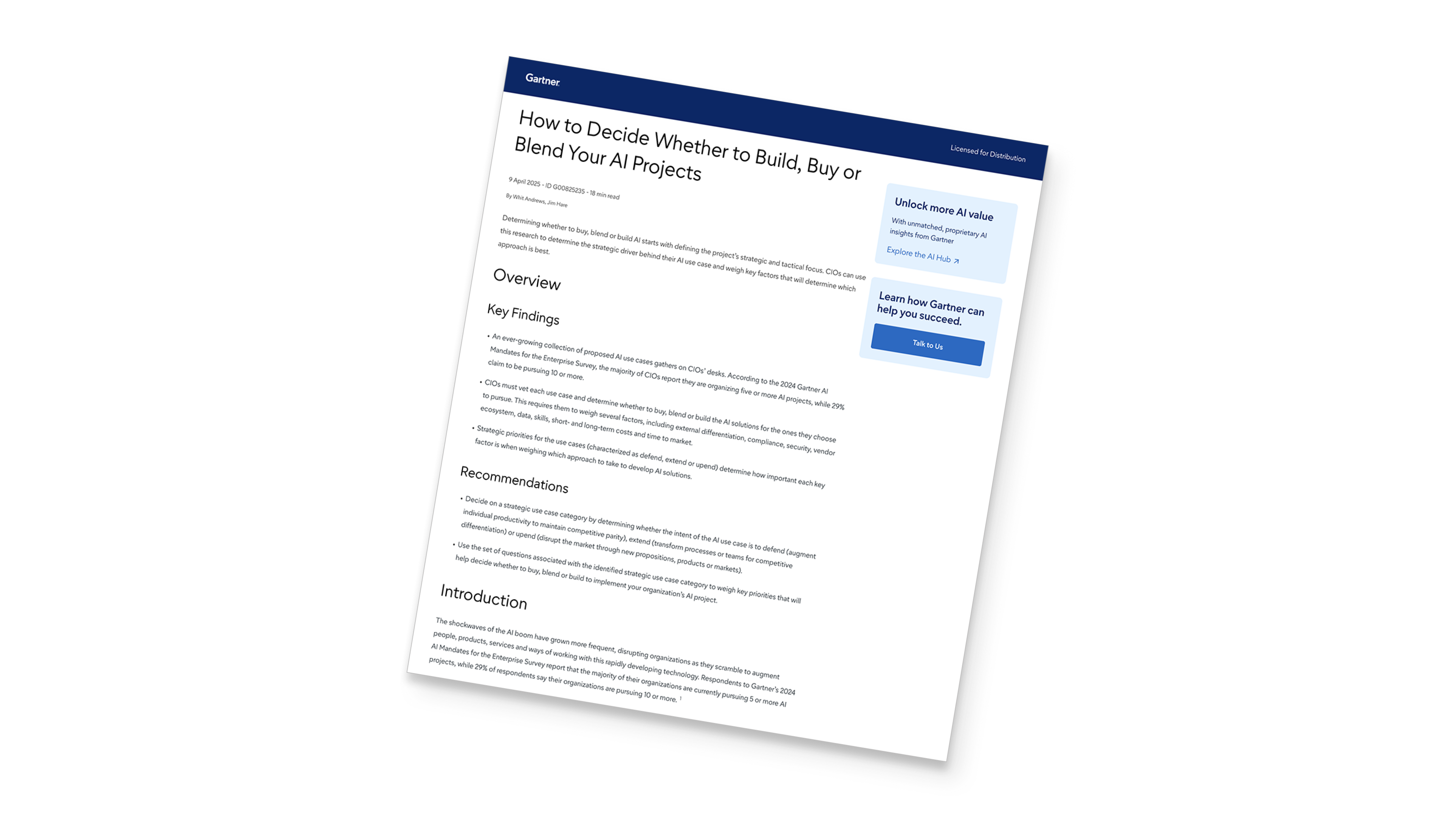
Get this valuable report that Gartner® is retiring soon from their research library
Why this matters for R&D engineering
Most AI buying advice assumes a business problem and business data. Hardware engineering is a different problem with different data. 3D geometries, CAD and simulation tool integration, engineering methods unique to your organizations, and compliance requirements are not compatible with a one-size-fits-all AI solution that’s supposed to orchestrate agents across the enterprise. A platform that orchestrates and advises your business will not execute your hardware engineering.
The Gartner framework gives you a neutral way to make the AI for engineering call. Start by asking what your AI is really for. If it’s for your engineering work, which delivers competitive differentiators to your organization, Gartner calls that an "Extend" use case. Once you see it that way, we believe the build, buy, or blend choice gets much clearer:
- Buy a one-size-fits-all enterprise IT solution like AWS Bedrock, Google Vertex, or Microsoft Foundry, and it leaves a gap, because it was not built for hardware engineering.
- Build your own from scratch with Claude, Gemini, or GPT, and you also have to maintain and secure it, which pulls your hardware team away from the work only they can do.
- Blend is the middle path: a purpose-platform built for hardware engineering that can execute: open the file, change the geometry, run the analysis, and hand back a result engineers can move forward with. For most teams, this is the fastest route to real results and a solution that scales into live R&D operations.
That is the category Synera built: agentic AI for engineering. Enterprise AI platforms give business advice, and Synera executes the engineering work. It runs on your own servers. It follows the same engineering steps every time, so the results are repeatable and scalable. It captures and digitalizes the know-how in your engineers' heads and it keeps a clear record that your compliance officers can sign off on.
What’s inside the report
- The Gartner decision logic for build, buy, and blend, and how to evaluate the right call for your organization.
- The nine factors Gartner weighs, from differentiation and time to market to security and skills.
- How to read your own AI projects as Defend, Extend, or Upend use cases.
Complete the form to read the full Gartner® report, available for a limited time
Prefer to talk through your AI for engineering solution?
Book a 30-minute consultation.
Gartner is a trademark of Gartner, Inc. and/or its affiliates.
Gartner, How to Decide Whether to Build, Buy or Blend Your AI Projects, Whit Andrews, Jim Hare, 9 April 2025.
Don't miss the next Gartner report. Sign up for our newsletter.
Synera’s approach to agentic AI for engineering
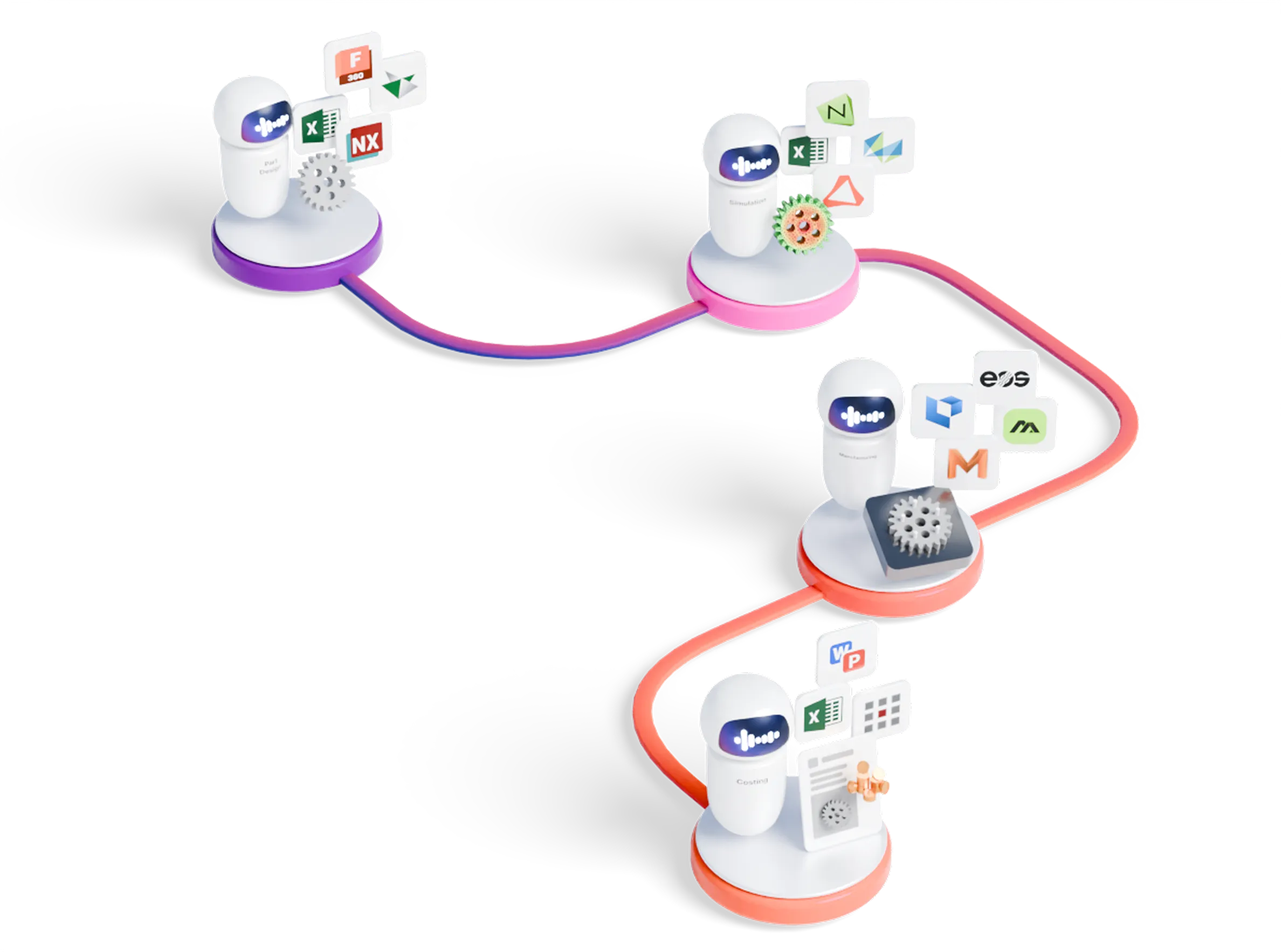
Trusted by R&D teams at 6 of the top 10 automotive OEMs. Synera is the number one choice for global manufacturers. It connects the CAD, CAE, PLM, ERP and costing tools R&D teams already trust, then runs teams of agents that execute real engineering work across design, simulation, and costing, with every step logged and auditable, and your engineers directing the work.
Deployed on-premises, Synera keeps sensitive engineering IP inside your environment. The result is a path out of stalled AI pilots and into production, so throughput capacity can scale fast, without adding headcount.
NASA, Airbus, Safran, and Arianespace are among the aerospace and defense organizations that run engineering on Synera. At Airbus, request-for-tender turnaround moved from 50 hours to 7 minutes. At NASA, design exploration that once took two engineers two days to produce four variants now lets a single engineer explore more than 100 variants in an hour. BMW transformed a 3-week design cycle, into 2 minutes. IMS Gear cut quote time by 99% with Synera. At SEAT, a Volkswagen Group subsidiary, engineers answer the manufacturability question in 30 minutes at the design phase.
Frequently Asked Questions
How to decide whether to build, buy, or blend your AI projects. It walks through the Gartner decision factors, from differentiation and time-to-market to security, skills, and cost, and shows how to read each AI project as a Defend, Extend, or Upend use case to make the right solution call for your organization.
R&D engineering and digitalization leaders weighing how to bring AI into automotive, aerospace, defense, and hardware development, who need a structured way to choose between buying a platform, building in-house, or blending solutions.
Build means developing and maintaining your own AI solution in-house. Buy means adopting a ready-made platform. Blend means configuring and owning a specialized platform built for your domain, so you keep control without carrying the full maintenance and security load of a scratch build.
Engineering runs on 3D geometries, CAD and simulation tools, organization-specific methods, and sign-off requirements that enterprise business AI was not designed for. A platform built that covers everything from marketing to finance can advise, but it will not execute inside your engineering stack.
Synera is purpose-built agentic AI for engineering. It runs on your own servers, follows the same steps every time so results are repeatable, and keeps a record your compliance officiers can sign off on. It works alongside your enterprise AI platforms to do the engineering work they cannot. Synera agents open engineering files, change the geometry, run the analysis, and hand back a result engineers can move forward with.
Fill in the short form above and we'll send the Gartner report straight to your screen and a copy to your inbox.